Crab Nebula
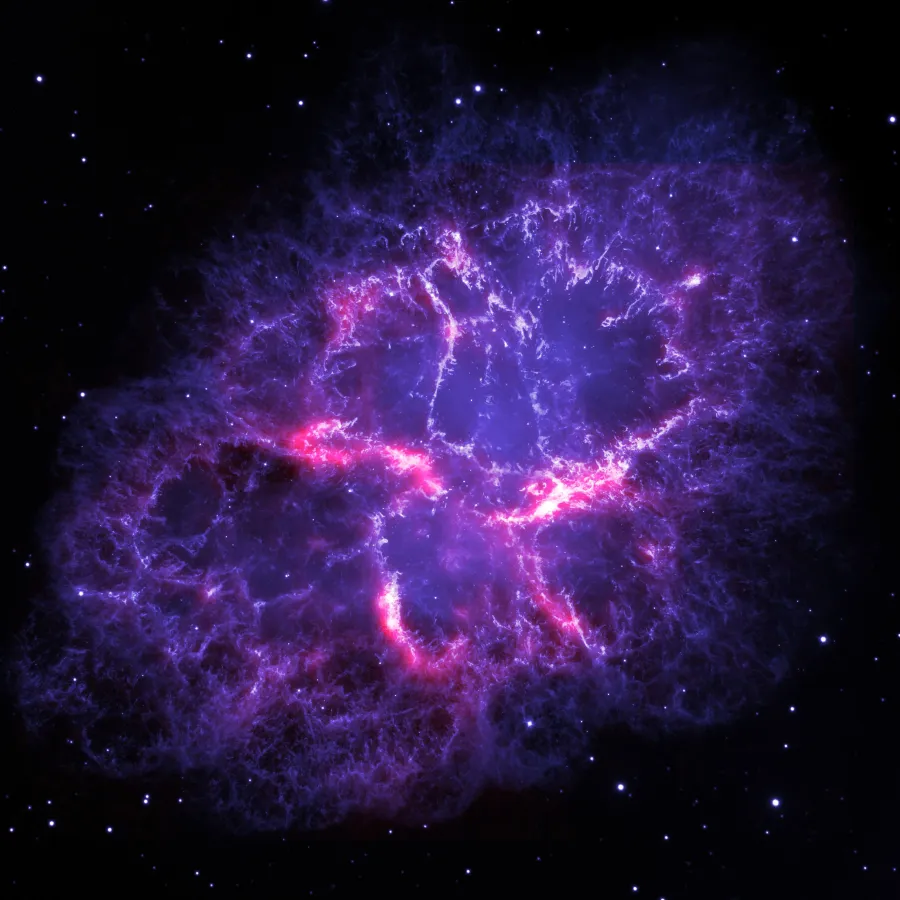
Unveiling the Majesty of the Crab Nebula: A Cosmic Wonder
Located approximately 6,500 light-years away in the constellation Taurus, the Crab Nebula is one of the most awe-inspiring and fascinating celestial bodies in our universe. Born from the catastrophic explosion of a massive star in the year 1054, this nebula has been a subject of interest for astronomers and stargazers alike for centuries. In this blog post, we'll delve into the history, science, and beauty of the Crab Nebula, exploring what makes it a true marvel of the cosmos.
A Brief History of the Crab Nebula
The Crab Nebula was first observed by Chinese astronomers in the year 1054, who recorded a bright star that was visible in the daytime for several weeks. The explosion that created the nebula was so powerful that it was visible to the naked eye from Earth, even during the day. Over the centuries, the nebula has been studied extensively by astronomers, including the famous English astronomer William Herschel, who discovered several new stars and celestial objects in the region.
The Science Behind the Crab Nebula
The Crab Nebula is the remnant of a massive star that exploded as a supernova, expelling a vast amount of energy and gas into space. The explosion was so powerful that it ejected the star's outer layers, creating a vast, expanding cloud of gas and dust. At the center of the nebula lies a pulsar, a rapidly rotating neutron star that emits intense beams of radiation. This pulsar is responsible for the nebula's remarkable energy output, which is observed in the form of X-rays, gamma rays, and visible light.
Structural Components of the Crab Nebula
The Crab Nebula is composed of several distinct components, each with its own unique characteristics:
- Pulsar: The pulsar at the center of the nebula is a rapidly rotating neutron star that emits intense beams of radiation.
- Nebular Filaments: The nebula's filaments are composed of gas and dust that have been heated and ionized by the pulsar's radiation.
- Shell Structure: The nebula's shell structure is composed of gas and dust that have been expelled by the supernova explosion.
- Magnetic Field: The nebula's magnetic field plays a crucial role in shaping its structure and emission properties.
Observing the Crab Nebula
The Crab Nebula is a popular target for amateur astronomers and professionals alike. With a telescope, observers can see the nebula's distinctive shell structure and filaments, which are visible in a range of wavelengths, from visible light to X-rays. The pulsar at the center of the nebula can also be observed, and its intense radiation beams can be detected using specialized equipment.
Conclusion
The Crab Nebula is a breathtaking example of the power and beauty of the universe. Its rich history, fascinating science, and stunning appearance make it a popular target for astronomers and stargazers around the world. As we continue to explore and study the Crab Nebula, we are reminded of the awe-inspiring complexity and beauty of the cosmos, and the many wonders that remain to be discovered. Whether you're a seasoned astronomer or just starting to explore the night sky, the Crab Nebula is a must-see destination that is sure to leave you in wonder and awe.
Written by
Keep reading
Read next

Why Failure Is the Fastest Path to Success

Royal Lineages: Write about the lavish, slow-cooked cuisines of the Nawabs of Hyderabad (like Hyderabadi Biryani) or the Rajput rulers of Rajasthan.

The "How-To" Tutorial: A clear, numbered, step-by-step walkthrough of a complex process, optimized for beginners.
Join in
Comments
No comments yet. Be the first to share your thoughts.